The distance between Stars and spiderwebs2017
Interesado en explorar las posibilidades de una estructura de obra que funcione como un sistema, ideé esta propuesta, la que tuvo su núcleo en el espacio USEGO (Sierre, Suiza) pero que se desplego de diversas maneras por la ciudad.
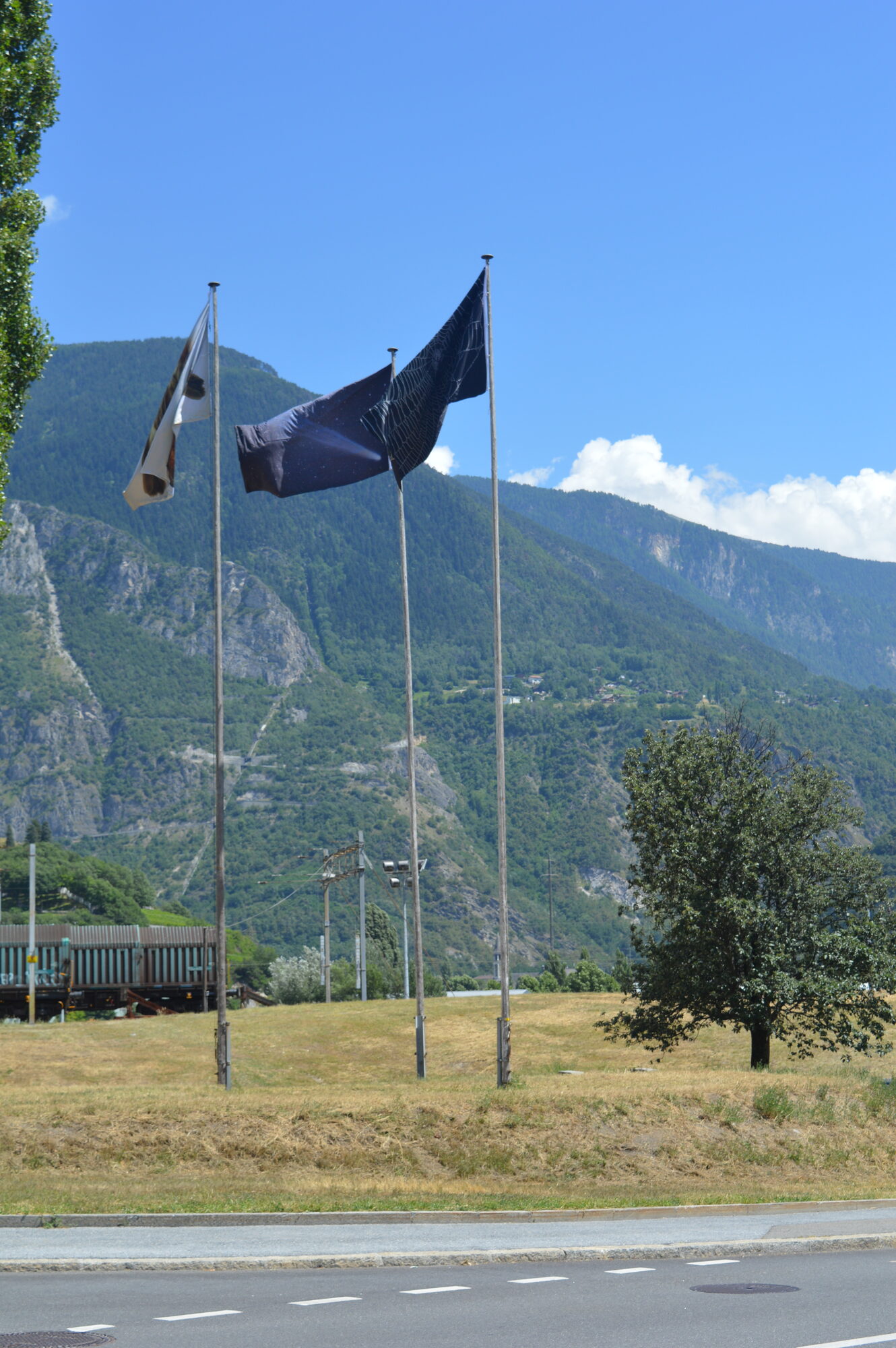
Tres banderas con imágenes fueron instaladas en tres mástiles afuera del espacio de exhibiciones. Estas funcionaban como una especie de índice y retrataban elementos significantes para mi propuesta: 1- Un pájaro muerto (ser que sabe volar, pero que muerto permanece estático), 2- Un meteorito (piedra que sabe volar), 3- Una tela de araña (tejido quieto que tiene la capacidad de detener insectos en vuelo, casa y trampa).
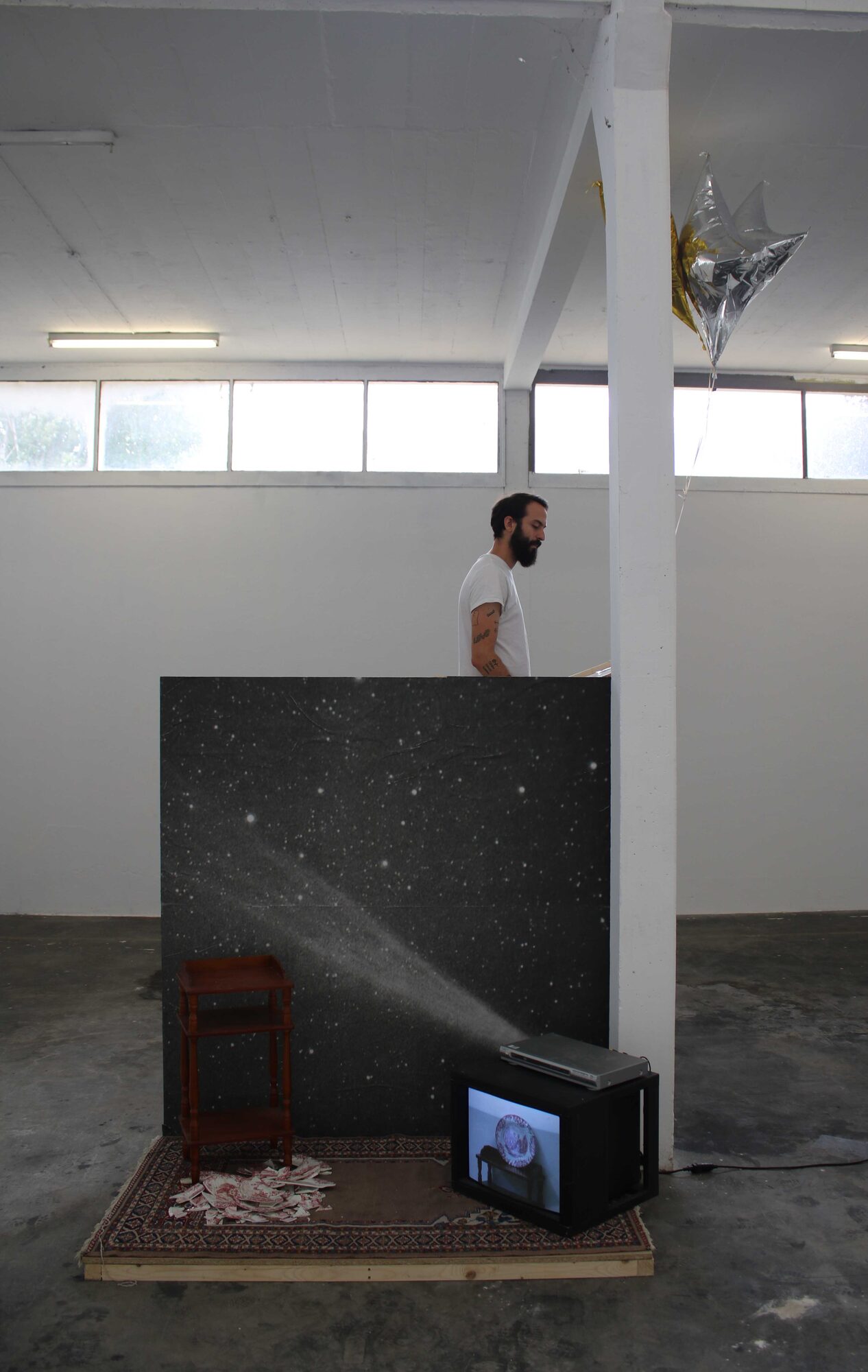
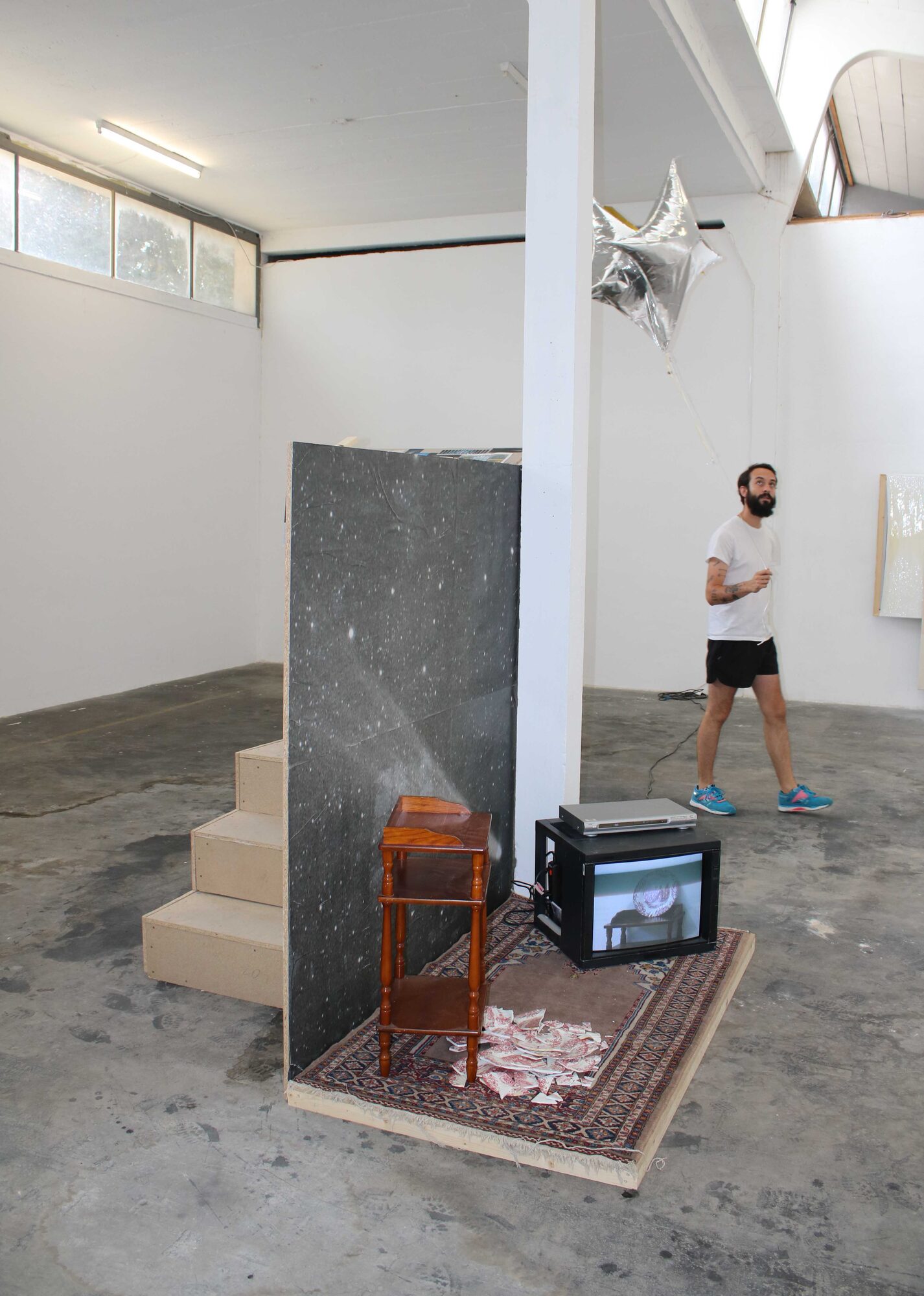
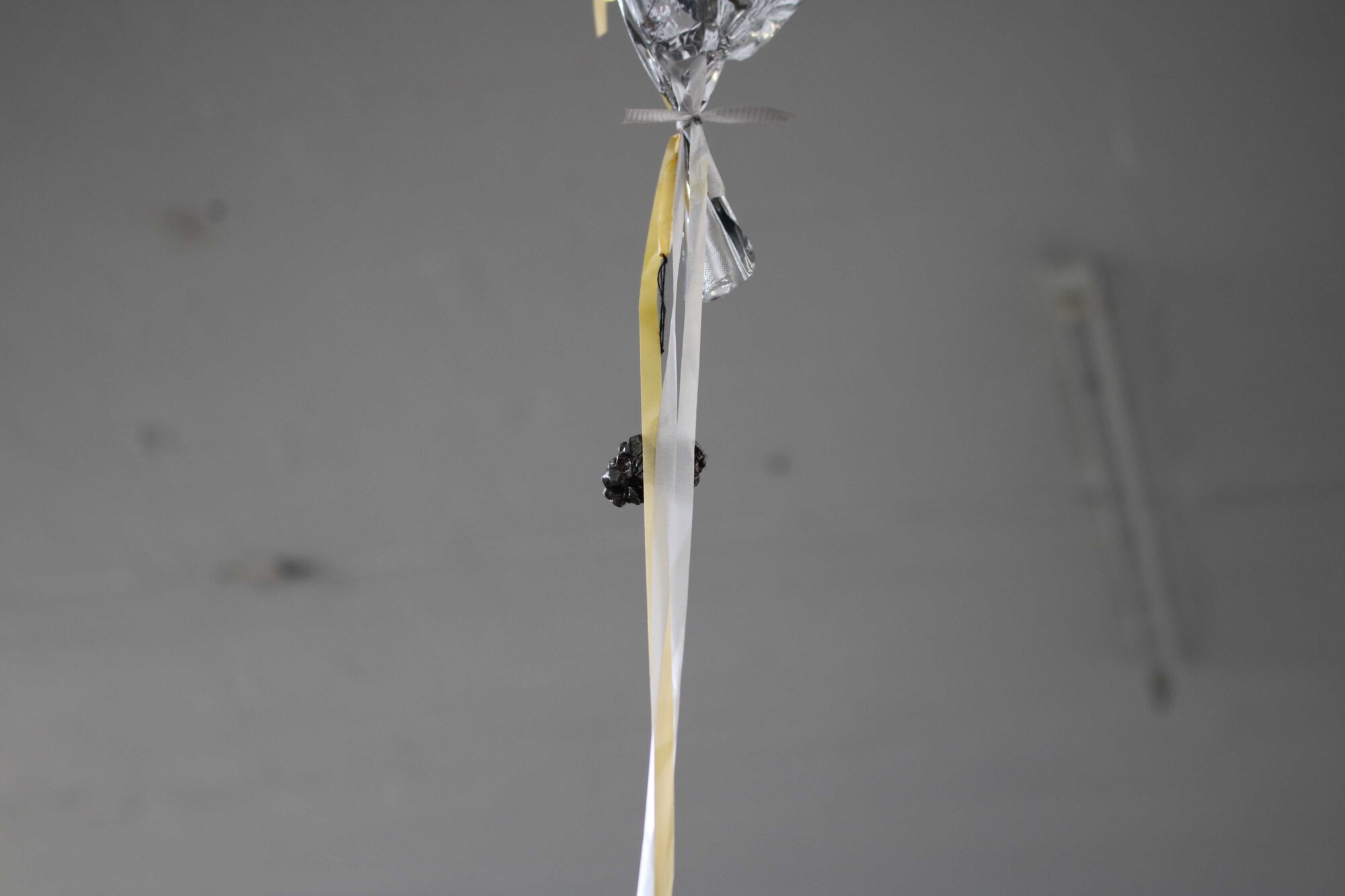
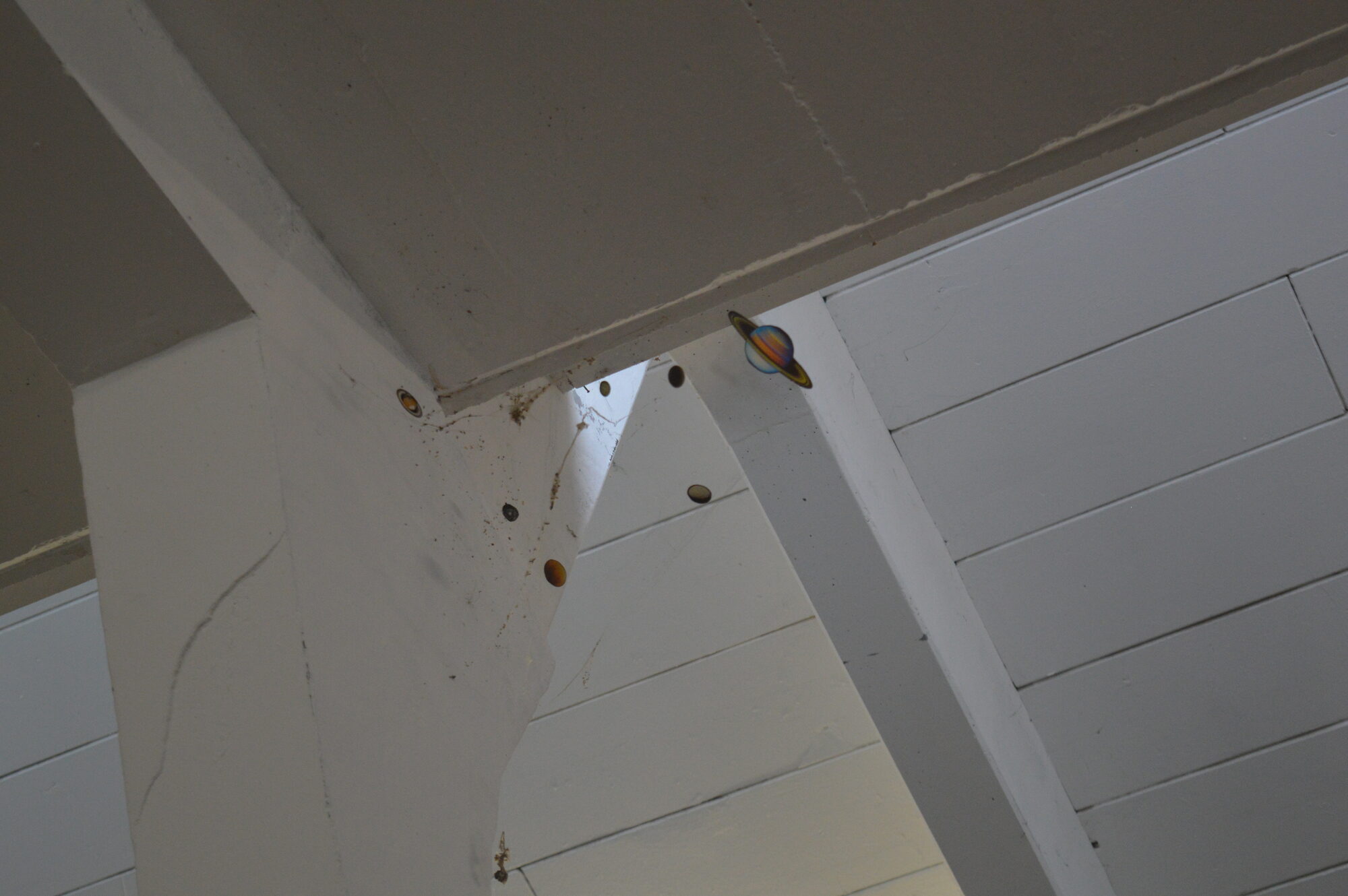
Al interior del espacio y, a modo de centro del proyecto, una estructura simple (un panel que esconde una escalera) propone al espectador que, camine en torno a un pilar llevando un ramo de globos con helio. Los globos llevan atado un pequeño meteorito. En la parte superior del pilar hay una tela de araña (que estaba en el espacio desde antes de mi intervención) en la que atrapé las imágenes de unos planetas recortadas desde enciclopedias. De esta manera, el espectador al girar en torno al pilar llevando los globos, ayuda al meteorito a orbitar en torno al pequeño sistema planetario hecho de recortes y sujeto en una telaraña.
Con el meteorito romí una serie de platos, los que se exhiben rotos junto a la pieza + el video registro de la acción.
Dejé Huesos de arcilla en lugares infestados de arañas, los que se exhibieron en distintos lugares dentro del espacio.
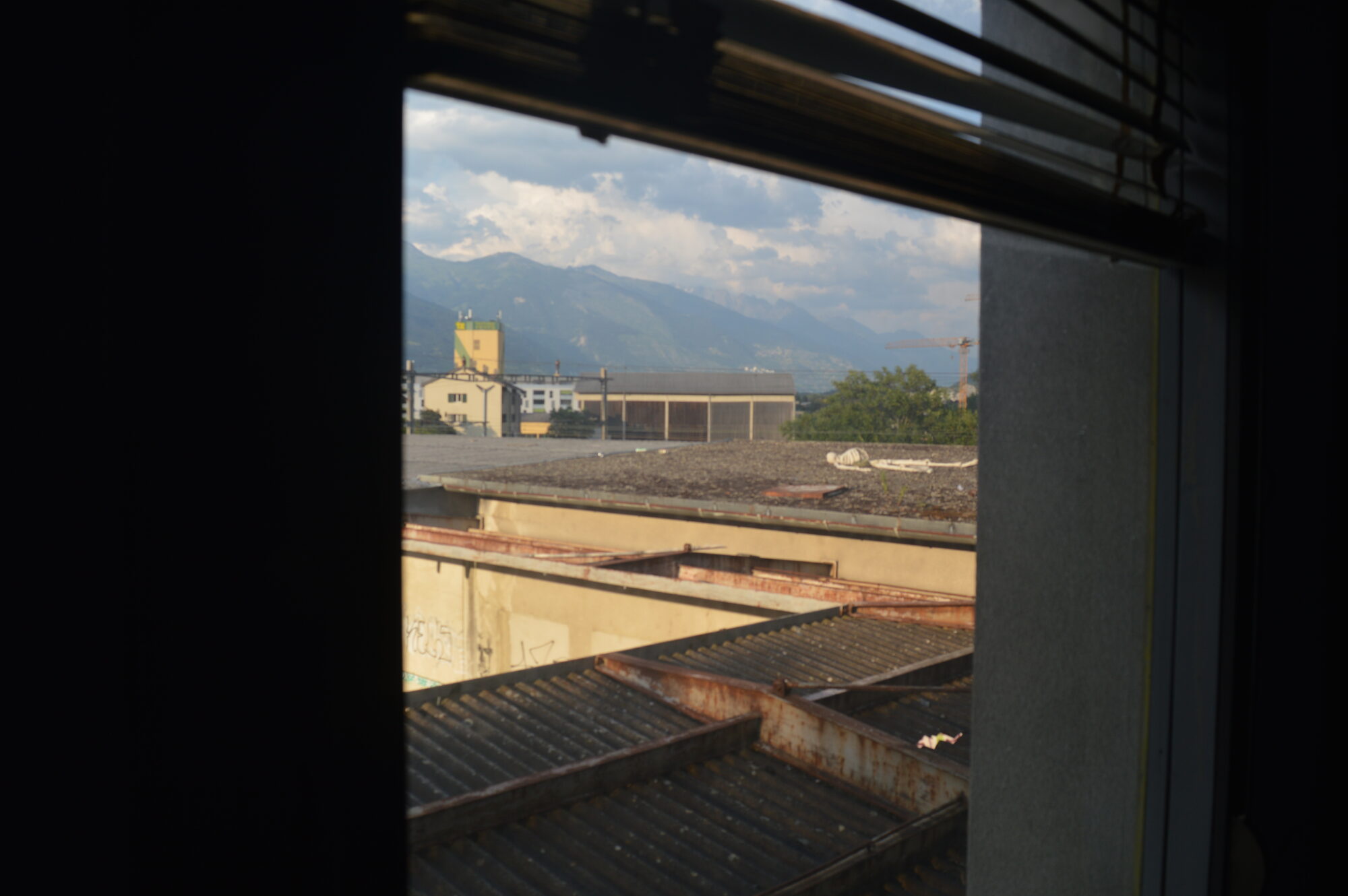
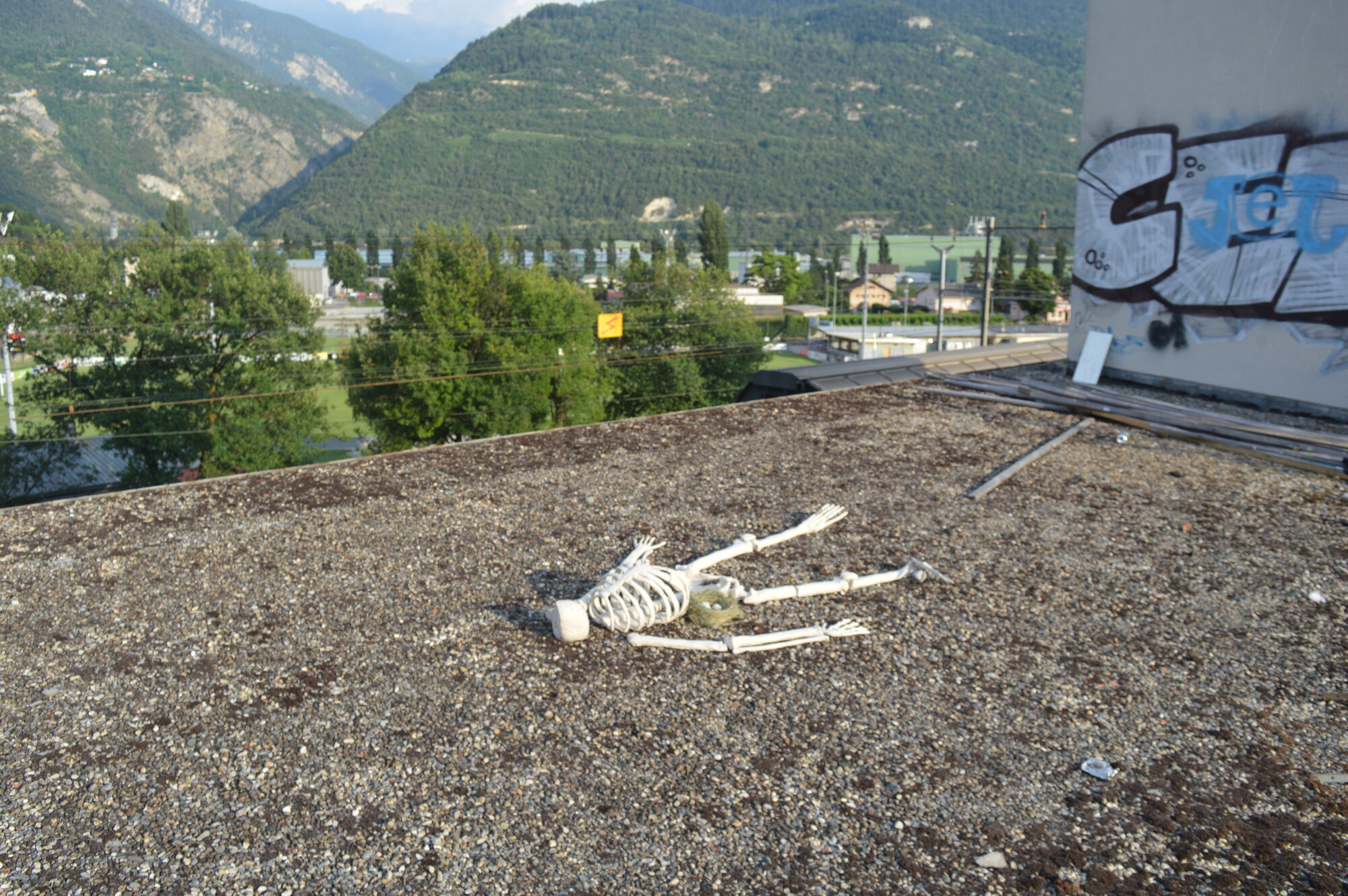
Un esqueleto humano hecho de arcilla se instaló en el techo del espacio, el que solo podía ser visto desde una ventana. En las costillas del esqueleto instalé un nido. Sobre ese techo vivían varias palomas. Concebí esta pieza como una vanitas vida, compuesta de una parte estática (la escultura de esqueleto) y una viva (las palomas).
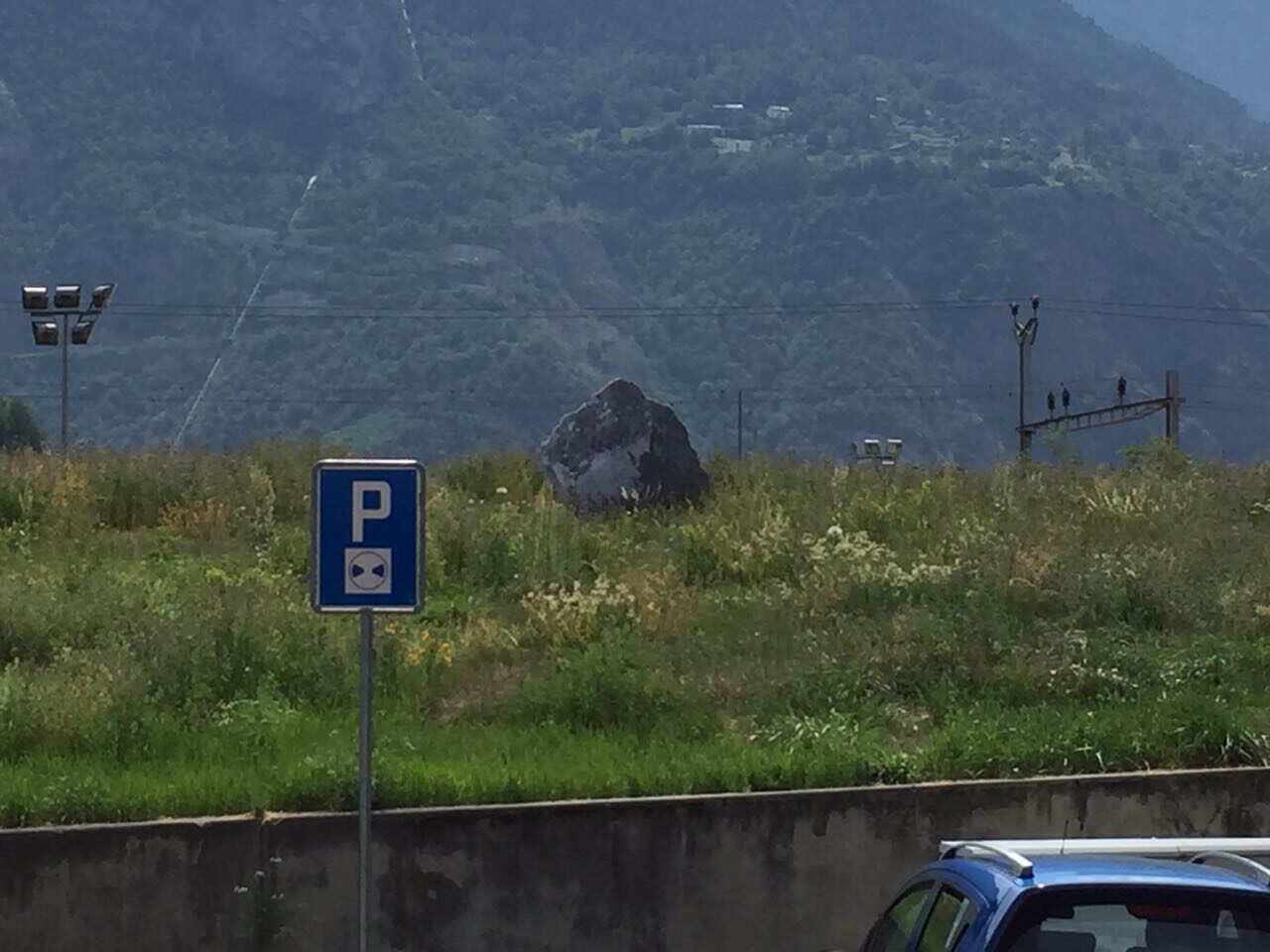
Escanee el meteorito y lo amplié, generando una serie de carteles de gran tamaño, que se instaron en distintos lugares de la ciudad, tanto en zonas rurales como otras más urbanas.
De forma periódica, una serie de autos circulaban por la ciudad en recorridos orbitales, de los cuales, el espacio USEGO, quedaba siempre en el centro. Estos autos circulaban mientras en sus equipos de sonido sonaban a alto volumen, canciones inspiradas por los distintos planetas del sistema solar (cada auto representaba a un planeta). De esta forma, la ciudad entera funcionaba como un modelo activo del sistema solar.
Interested in exploring the possibilities of an art installation that functions as a system, I devised this proposal, which had its core at the USEGO space (Sierre, Switzerland) but unfolded in various ways throughout the city.
Three flags bearing images were installed on three flagpoles outside the exhibition space. These served as a sort of index and depicted elements significant to my proposal: 1—A dead bird (a creature that can fly, but which, once dead, remains static); 2—A meteorite (a stone that can fly); 3—A spiderweb (a still web capable of trapping insects in flight—both a home and a trap).
Inside the space, and serving as the centerpiece of the project, a simple structure (a panel concealing a staircase) invites the viewer to walk around a pillar while carrying a bouquet of helium balloons. A small meteorite is tied to each balloon. At the top of the pillar is a spiderweb (which had been there before my intervention) in which I trapped images of planets cut out from encyclopedias. In this way, as the viewer circles the pillar carrying the balloons, they help the meteorite orbit around the small planetary system made of cutouts and suspended in a spiderweb.
I used the meteorite to smash a series of plates, which are displayed broken alongside the piece and the video documentation of the action.
I left “Clay Bones” in places infested with spiders, which were exhibited in various locations within the space.
A human skeleton made of clay was installed on the ceiling of the space, visible only from a window. I installed a nest on the skeleton’s ribs. Several pigeons lived on that ceiling. I conceived this piece as a “life vanitas,” composed of a static part (the skeleton sculpture) and a living part (the pigeons).
I scanned the meteorite and enlarged it, creating a series of large-scale posters that were installed in various locations throughout the city, in both rural and more urban areas.
Periodically, a series of cars circulated through the city on orbital routes, with the USEGO space always at the center. These cars drove around while their sound systems blared songs inspired by the different planets of the solar system (each car represented a planet). In this way, the entire city functioned as an active model of the solar system.